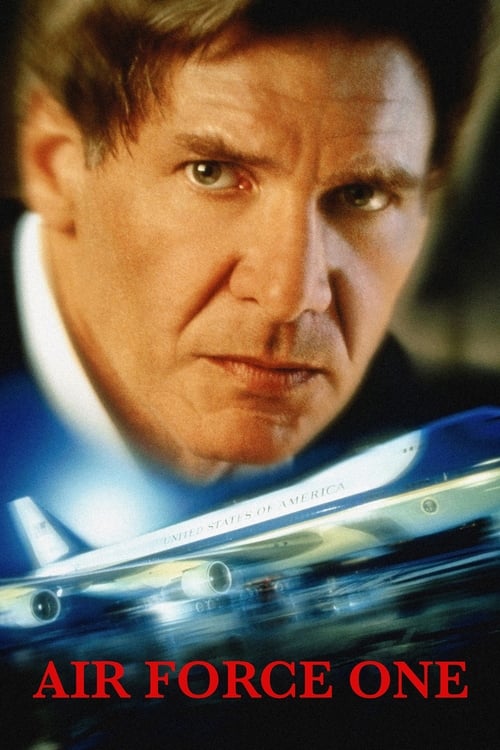
Air Force One
1997 · Directed by Wolfgang Petersen
Woke Score
CriticCritic Score
Audience
Ultra Based
Critics rated this 58 points above its woke score. Among Ultra Based films, this critic score ranks #852 of 1469.
Representation Casting
Score: 15/100
The cast is predominantly white, with the sole significant female role (Glenn Close) being largely reactive. No meaningful representation of racial or ethnic diversity beyond token extras.
LGBTQ+ Themes
Score: 0/100
No LGBTQ+ themes, representation, or subtext. The film contains no indication of any non-heterosexual characters or relationships.
Feminist Agenda
Score: 10/100
While Glenn Close appears as Vice President, female characters (wife, daughter, female Secret Service agent) are primarily passive or exist as hostages. No meaningful feminist perspective or critique of patriarchal structures.
Racial Consciousness
Score: 5/100
The film presents Russians as monolithic villains without any nuanced engagement with cultural or political complexity. No meaningful racial consciousness or examination of systemic issues.
Climate Crusade
Score: 0/100
No environmental themes, climate consciousness, or ecological concerns present in the narrative or visual language.
Eat the Rich
Score: 0/100
The film celebrates American military and governmental power structures. No critique of capitalism, corporate power, or wealth inequality.
Body Positivity
Score: 0/100
No body positivity messaging or representation of diverse body types. The film presents conventionally attractive, able-bodied protagonists.
Neurodivergence
Score: 0/100
No representation of neurodivergent characters, mental health consciousness, or disability representation.
Revisionist History
Score: 0/100
The film presents straightforward Cold War narratives without revisionist historical perspective or examination of American historical responsibility.
Lecture Energy
Score: 5/100
The film contains minimal dialogue about social issues. Its patriotic messaging is conveyed through action and spectacle rather than explicit lecturing, though the ideological positioning is clear.


Synopsis
When Russian neo-nationalists hijack Air Force One, the world's most secure and extraordinary aircraft, the President is faced with a nearly impossible decision to give in to terrorist demands or sacrifice not only the country's dignity, but the lives of his wife and daughter.
Consciousness Assessment
Air Force One arrives at the tail end of the Cold War action thriller, a genre predicated on the assumption that American military might and presidential decisiveness represent the proper order of things. Harrison Ford's President James Marshall is a man of action rather than contemplation, a World War II veteran who solves problems by throwing himself out of windows and punching terrorists in the face. The film exhibits no interest in interrogating these values or presenting any meaningful perspective outside its narrow ideological framework. Glenn Close appears as the Vice President, a woman in a position of power, though her role is largely reactive and subordinate to Ford's heroic agency.
The film's casting reflects the whiteness of 1990s studio action cinema without apology or apparent self-consciousness. Gary Oldman plays the Russian terrorist villain with theatrical menace, embodying a post-Soviet anxiety that the film treats as a straightforward geopolitical threat rather than something requiring nuance or historical context. There is no representation of disability, neurodivergence, or any meaningful exploration of body diversity. The women in the film, including Ford's wife and daughter, exist primarily as hostages to be rescued rather than as characters with agency or interiority.
Wolfgang Petersen's direction is brisk and efficient, concerned with spectacle and momentum rather than any social commentary. The film wants us to feel good about American power, about a president who puts his family above protocol, about a military establishment that succeeds through superior firepower and determination. It is, in every measurable way, a pre-woke artifact, a film that could not have been made in the 2020s without substantial revision to its fundamental assumptions. That it was made in 1997 means we can simply appreciate it as a product of its moment, when such straightforward nationalism required no justification.
Analysis generated by our Consciousness Algorithm
Critic Reviews
“Harrison Ford as the President of the United States is such a perfect piece of casting that it's at once a fantasy and a joke: The joke is how perfect the fantasy is. [25 Jul 1997, p. 48]”
“At once vigorous and old-fashioned, a piece of expertly crafted entertainment that gets the job done with skill and panache. [25 July 1997]”
“Dares to present a flat-out heroic president, without the safety net of irony. It succeeds.”
“If you've ever sat in a jet waiting on the runway, feeling it lumbering along in place and then bucking and shaking when it's cleared for take-off, you know what it's like to sit through Air Force One.”
Consciousness Markers
The cast is predominantly white, with the sole significant female role (Glenn Close) being largely reactive. No meaningful representation of racial or ethnic diversity beyond token extras.
No LGBTQ+ themes, representation, or subtext. The film contains no indication of any non-heterosexual characters or relationships.
While Glenn Close appears as Vice President, female characters (wife, daughter, female Secret Service agent) are primarily passive or exist as hostages. No meaningful feminist perspective or critique of patriarchal structures.
The film presents Russians as monolithic villains without any nuanced engagement with cultural or political complexity. No meaningful racial consciousness or examination of systemic issues.
No environmental themes, climate consciousness, or ecological concerns present in the narrative or visual language.
The film celebrates American military and governmental power structures. No critique of capitalism, corporate power, or wealth inequality.
No body positivity messaging or representation of diverse body types. The film presents conventionally attractive, able-bodied protagonists.
No representation of neurodivergent characters, mental health consciousness, or disability representation.
The film presents straightforward Cold War narratives without revisionist historical perspective or examination of American historical responsibility.
The film contains minimal dialogue about social issues. Its patriotic messaging is conveyed through action and spectacle rather than explicit lecturing, though the ideological positioning is clear.