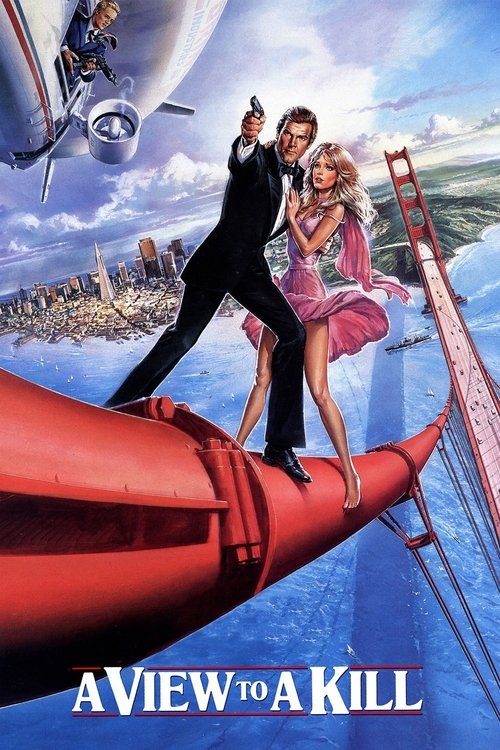
A View to a Kill
1985 · Directed by John Glen
Woke Score
CriticCritic Score
Audience
Ultra Based
Critics rated this 36 points above its woke score. Among Ultra Based films, this critic score ranks #1355 of 1469.
Representation Casting
Score: 8/100
The cast includes Grace Jones and David Yip, but they are deployed in stereotypical villain and henchman roles respectively. Representation exists but lacks intentionality or complexity.
LGBTQ+ Themes
Score: 0/100
Grace Jones' androgynous presentation reads as exotic menace rather than any meaningful engagement with gender or sexuality. The film contains no LGBTQ+ themes or representation.
Feminist Agenda
Score: 5/100
Tanya Roberts' character exists primarily to be protected and rescued. She is competent in isolated moments but remains fundamentally subordinate to Bond's agency and narrative.
Racial Consciousness
Score: 3/100
Minority characters appear in the cast but without any racial consciousness or meaningful integration into the narrative. They function as exotic set dressing.
Climate Crusade
Score: 0/100
The plot concerns triggering an earthquake to destroy Silicon Valley but frames this as personal villainy rather than any critique of environmental destruction or climate impact.
Eat the Rich
Score: 2/100
Max Zorin is a corporate villain, but the film contains no systemic critique of capitalism. He is simply a bad individual, not a symptom of larger economic structures.
Body Positivity
Score: 0/100
The film operates within rigid 1980s standards of physical attractiveness with no awareness of body diversity or alternative aesthetic values.
Neurodivergence
Score: 0/100
No characters are portrayed with neurodivergent traits or any engagement with disability or neurological difference.
Revisionist History
Score: 0/100
The film contains no revisionist historical claims or engagement with historical narratives of any kind.
Lecture Energy
Score: 10/100
The film is relentlessly plot-driven and contains minimal exposition or explanation. When dialogue occurs, it serves the narrative rather than preachy purposes. This is its primary virtue.


Synopsis
A newly-developed microchip designed by Zorin Industries for the British Government that can survive the electromagnetic radiation caused by a nuclear explosion has landed in the hands of the KGB. James Bond must find out how and why. His suspicions soon lead him to big industry leader Max Zorin who forms a plan to destroy his only competition in Silicon Valley by triggering a massive earthquake in the San Francisco Bay.
Consciousness Assessment
A View to a Kill arrives from that peculiar era when James Bond films still believed themselves to be the apex of entertainment without any particular concern for contemporary progressive sensibilities. Roger Moore glides through the proceedings with the kind of distinguished nonchalance that suggests he has read none of the script and cares even less about its contents. The film presents women as either ornamental or villainous, with Tanya Roberts serving as the nominal love interest who exists primarily to be rescued, while Grace Jones, the film's most visually interesting presence, is deployed as a henchwoman whose queerness reads as menace rather than representation. Christopher Walken's performance as Max Zorin transcends the material through sheer force of his unhinged brilliance, suggesting he understood something about 1980s excess that the film itself does not quite grasp.
The plot, concerning a Silicon Valley earthquake scheme of staggering implausibility, betrays no awareness whatsoever of environmental consciousness or corporate critique beyond the most superficial villainy. Max Zorin is evil simply because he is evil, not because the film harbors any actual analysis of late capitalism or technological monopoly. The racial composition of the cast reflects the default Hollywood casting of 1985, which is to say it reflects nothing intentional at all. A pair of minor characters of color appear without comment or context, which was the standard operating procedure of the era. The film's relationship to gender politics remains entirely pre-ironic, a period piece that does not know it is a period piece.
This is Bond cinema operating at full cruise control, confident in its own irrelevance to any conversation about representation or social consciousness. The film's woke score reflects not moral failure but simple chronological innocence. We are not measuring a 1985 action film against contemporary standards so much as noting its complete indifference to them, which is precisely what we should expect from a work that predates the entire conceptual apparatus by several decades.
Analysis generated by our Consciousness Algorithm
Critic Reviews
“I was at least able to follow the plot (which is not to say it wasn't as ludicrous as any Bond film -- just that I could follow it). But most of all this movie has camp value -- it's fun to sit there and make fun of every last detail, and that redeems it quite a bit.”
“Hard as it is to justify Bond films on intellectual grounds, there's something invigorating -- and strangely reassuring -- about this sort of picture. It is comforting to feel that should a psychopath threaten the stability of the world, our hero will be ready to wipe the grin off his face and shove him into San Francisco Bay.”
“Beyond Walken and Jones’ considerable contributions, A View to a Kill also contains a robust assortment of action sequences.”
“The James Bond series has had its bummers, but nothing before in the class of this one.”
Consciousness Markers
The cast includes Grace Jones and David Yip, but they are deployed in stereotypical villain and henchman roles respectively. Representation exists but lacks intentionality or complexity.
Grace Jones' androgynous presentation reads as exotic menace rather than any meaningful engagement with gender or sexuality. The film contains no LGBTQ+ themes or representation.
Tanya Roberts' character exists primarily to be protected and rescued. She is competent in isolated moments but remains fundamentally subordinate to Bond's agency and narrative.
Minority characters appear in the cast but without any racial consciousness or meaningful integration into the narrative. They function as exotic set dressing.
The plot concerns triggering an earthquake to destroy Silicon Valley but frames this as personal villainy rather than any critique of environmental destruction or climate impact.
Max Zorin is a corporate villain, but the film contains no systemic critique of capitalism. He is simply a bad individual, not a symptom of larger economic structures.
The film operates within rigid 1980s standards of physical attractiveness with no awareness of body diversity or alternative aesthetic values.
No characters are portrayed with neurodivergent traits or any engagement with disability or neurological difference.
The film contains no revisionist historical claims or engagement with historical narratives of any kind.
The film is relentlessly plot-driven and contains minimal exposition or explanation. When dialogue occurs, it serves the narrative rather than preachy purposes. This is its primary virtue.