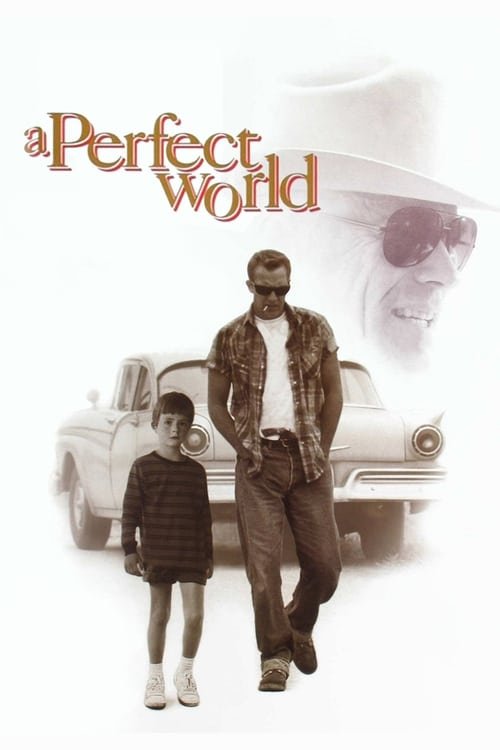
A Perfect World
1993 · Directed by Clint Eastwood
Woke Score
CriticCritic Score
Audience
Ultra Based
Critics rated this 67 points above its woke score. Among Ultra Based films, this critic score ranks #602 of 1469.
Representation Casting
Score: 0/100
The cast reflects standard 1993 Hollywood demographics with no particular attention to diverse representation or casting as a statement of cultural values.
LGBTQ+ Themes
Score: 0/100
No LGBTQ+ themes, characters, or representation are present in this heteronormative crime thriller.
Feminist Agenda
Score: 0/100
The film contains minimal female characters and no feminist agenda or critique of gender relations.
Racial Consciousness
Score: 0/100
The narrative makes no engagement with racial themes, systemic racism, or questions of racial justice.
Climate Crusade
Score: 0/100
Environmental concerns are entirely absent from this character-driven crime narrative.
Eat the Rich
Score: 0/100
While the protagonist is a criminal, the film does not develop any systematic critique of capitalism or class exploitation.
Body Positivity
Score: 0/100
No engagement with body positivity, disability representation, or challenges to beauty standards.
Neurodivergence
Score: 0/100
The film contains no meaningful representation of neurodivergence or neurodivergent characters.
Revisionist History
Score: 0/100
Set in 1963, the film does not attempt to reframe historical events or offer revisionist historical perspectives.
Lecture Energy
Score: 18/100
The film's critique of Jehovah's Witness practices and religious repression, while present, operates through narrative and character action rather than preachy exposition, keeping the lecture energy relatively restrained despite the ideological undercurrent.


Synopsis
A kidnapped boy strikes up a friendship with his captor: an escaped convict on the run from the law, headed by an honorable U.S. Marshal.
Consciousness Assessment
A Perfect World arrives at the intersection of Clint Eastwood's late-period preoccupation with moral ambiguity and a narrative that, perhaps unintentionally, traffics in certain progressive sensibilities regarding religious repression. Kevin Costner's escaped convict, Butch Haynes, is presented as a fundamentally decent man corrupted by circumstance and brutalized by an unjust system, while the boy's Jehovah's Witness mother and her faith are portrayed as sources of psychological damage and deprivation. The film's sympathies clearly lie with liberating the child from religious constraint, though this critique operates at a fairly surface level and lacks the kind of systemic interrogation that would mark it as genuinely contemporary in its social consciousness.
The picture does engage with religious critique, positioning strict fundamentalist practice as inherently harmful to children and presenting secular hedonism, embodied by Costner's character taking the boy to enjoy worldly pleasures, as a form of benevolent awakening. Yet the film remains fundamentally a character study and chase narrative rather than a work of social advocacy. The representation of women is limited, the racial composition of the cast reflects 1993 Hollywood defaults, and there is no meaningful engagement with questions of identity, systemic inequality, or structural injustice beyond the individual redemption arc.
What the analysis reveals is a film that contains the seeds of progressive critique but lacks any coherent ideological framework or contemporary consciousness. It is interested in sympathizing with criminals and questioning authority in the form of religious institutions, but these impulses are not mobilized in service of any larger cultural project. The work remains a mainstream thriller that occasionally gestures toward more challenging material without committing to it.
Analysis generated by our Consciousness Algorithm
Critic Reviews
“This is a movie that surprises you. The setup is such familiar material that you think the story is going to be flat and fast. But the screenplay by John Lee Hancock goes deep. And the direction by Clint Eastwood finds strange, quiet moments of perfect truth in the story.”
“A deeply felt, deceptively simple film that marks the high point of Mr. Eastwood's directing career thus far.”
“Eastwood grabs the reins and draws Costner's scrappiest performance since Bull Durham. In going beyond chase-yarn duty, Eastwood and Costner do themselves proud.”
“The trouble with Eastwood’s attempt to make a thriller with heart is that, in retreating from his darker impulses, he muffles his own voice as a moviemaker.”
Consciousness Markers
The cast reflects standard 1993 Hollywood demographics with no particular attention to diverse representation or casting as a statement of cultural values.
No LGBTQ+ themes, characters, or representation are present in this heteronormative crime thriller.
The film contains minimal female characters and no feminist agenda or critique of gender relations.
The narrative makes no engagement with racial themes, systemic racism, or questions of racial justice.
Environmental concerns are entirely absent from this character-driven crime narrative.
While the protagonist is a criminal, the film does not develop any systematic critique of capitalism or class exploitation.
No engagement with body positivity, disability representation, or challenges to beauty standards.
The film contains no meaningful representation of neurodivergence or neurodivergent characters.
Set in 1963, the film does not attempt to reframe historical events or offer revisionist historical perspectives.
The film's critique of Jehovah's Witness practices and religious repression, while present, operates through narrative and character action rather than preachy exposition, keeping the lecture energy relatively restrained despite the ideological undercurrent.