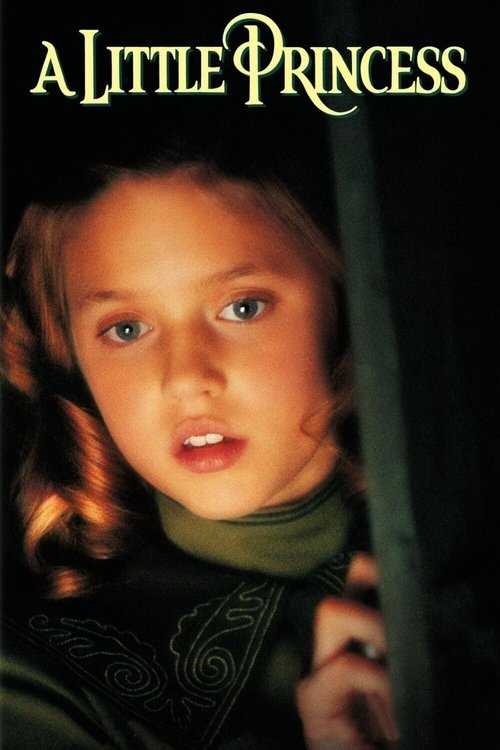
A Little Princess
1995 · Directed by Alfonso Cuarón
Woke Score
CriticCritic Score
Audience
Ultra Based
Critics rated this 75 points above its woke score. Among Ultra Based films, this critic score ranks #296 of 1469.
Representation Casting
Score: 25/100
Vanessa Lee Chester appears as a significant supporting character, reflecting 1990s inclusive casting rather than contemporary progressive activism. The representation is present but not foregrounded or commented upon.
LGBTQ+ Themes
Score: 0/100
No LGBTQ+ themes, characters, or content present in the film.
Feminist Agenda
Score: 20/100
The protagonist is a resilient young girl whose imagination and moral character are her primary strengths, but this derives from the 1905 source material, not contemporary feminist reframing. The story centers her agency naturally within its narrative.
Racial Consciousness
Score: 0/100
While the cast includes Black actors, the film does not foreground racial themes or consciousness. Representation exists but without contemporary racial commentary.
Climate Crusade
Score: 0/100
No climate-related messaging or themes are present in the film.
Eat the Rich
Score: 15/100
The film critiques class exploitation and wealth inequality through Sara's mistreatment when she becomes poor, but this social commentary is inherent to the Victorian-era source material, not a contemporary progressive critique.
Body Positivity
Score: 0/100
No body positivity messaging or representation is evident in the film.
Neurodivergence
Score: 0/100
No neurodivergence representation or accommodation is present in the film.
Revisionist History
Score: 0/100
The film is set during WWI but does not attempt to revise historical narratives through a contemporary progressive lens.
Lecture Energy
Score: 0/100
The film tells its story through narrative and visual language without preachy social messaging or lectures to the audience.


Synopsis
When her father enlists to fight for the British in WWI, young Sara Crewe goes to New York to attend the same boarding school her late mother attended. She soon clashes with the severe headmistress, Miss Minchin, who attempts to stifle Sara's creativity and sense of self-worth.
Consciousness Assessment
Alfonso Cuarón's "A Little Princess" is a thoughtfully crafted adaptation of Frances Hodgson Burnett's 1905 novel, rendered in sumptuous visual language that elevates the material without distorting its essence. The film centers a young girl's imagination and moral fortitude as her primary weapons against institutional cruelty and class exploitation, themes that naturally emerge from the source text rather than from contemporary progressive reframing. The casting of Vanessa Lee Chester as Becky, Sara's closest friend, reflects 1990s inclusive practices rather than a deliberate engagement with modern diversity discourse.
The film's critique of wealth inequality and institutional power structures, while present, belongs to the Victorian social commentary embedded in Burnett's original work, not to the specific constellation of 2020s progressive sensibilities we measure here. There is no climate messaging, no explicit engagement with neurodivergence, no LGBTQ+ content, and no attempt at revisionist history or social lecture. The story unfolds through narrative and visual metaphor, allowing viewers to extract meaning rather than having it explained to them.
What we encounter is a film that happens to contain progressive elements by accident of its source material and its era's casting norms, but which does not activate the particular machinery of contemporary cultural consciousness that defines modern progressive sensibility. It is simply a good children's film, and that remains sufficient unto itself.
Analysis generated by our Consciousness Algorithm
Critic Reviews
“With its beautifully crafted starburst of colors and themes spanning its requisite Victorian gravity, A Little Princess is a beguiling little supernova of a movie I can't imagine anyone not loving. [19 May 1995, p.64]”
“This is a picture that may sound sappy but probably will enrapture audiences lucky enough to catch it. [19 May 1995, p.L]”
“There are moments in A Little Princess--particularly Cuaron's Indian play-within-the-play, which is nearly avant-garde in its conception--when you may just want to clap from pleasure. My advice to you is: Go ahead, you're a grown-up. [26 May 26 1995]”
“Infused with a dark charm that will appeal to some girls, A Little Princess, based on the classic novel by Frances Hodgson Burnett, is as near to a mannered, lushly photographed Merchant/Ivory-style film as you'll get in a kids' movie.”
Consciousness Markers
Vanessa Lee Chester appears as a significant supporting character, reflecting 1990s inclusive casting rather than contemporary progressive activism. The representation is present but not foregrounded or commented upon.
No LGBTQ+ themes, characters, or content present in the film.
The protagonist is a resilient young girl whose imagination and moral character are her primary strengths, but this derives from the 1905 source material, not contemporary feminist reframing. The story centers her agency naturally within its narrative.
While the cast includes Black actors, the film does not foreground racial themes or consciousness. Representation exists but without contemporary racial commentary.
No climate-related messaging or themes are present in the film.
The film critiques class exploitation and wealth inequality through Sara's mistreatment when she becomes poor, but this social commentary is inherent to the Victorian-era source material, not a contemporary progressive critique.
No body positivity messaging or representation is evident in the film.
No neurodivergence representation or accommodation is present in the film.
The film is set during WWI but does not attempt to revise historical narratives through a contemporary progressive lens.
The film tells its story through narrative and visual language without preachy social messaging or lectures to the audience.