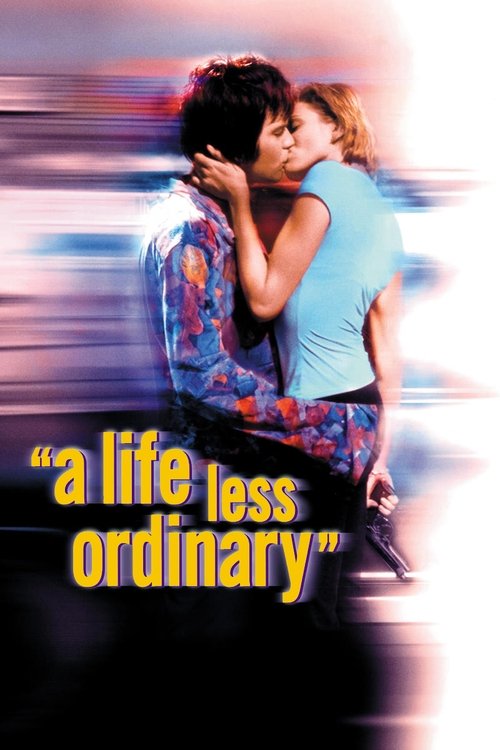
A Life Less Ordinary
1997 · Directed by Danny Boyle
Woke Score
CriticCritic Score
Audience
Ultra Based
Critics rated this 22 points above its woke score. Among Ultra Based films, this critic score ranks #1382 of 1469.
Representation Casting
Score: 15/100
The ensemble includes actors of color in supporting roles (Delroy Lindo, Tony Shalhoub, Stanley Tucci), but this appears to be standard ensemble casting rather than a deliberate representation strategy. The leads remain white.
LGBTQ+ Themes
Score: 0/100
No LGBTQ+ representation, themes, or representation in this heterosexual romantic comedy.
Feminist Agenda
Score: 25/100
The female protagonist demonstrates agency and capability, shooting firearms and freeing herself from kidnapping. However, the core premise romanticizes kidnapping, and the narrative doesn't critique this dynamic, undermining any feminist positioning.
Racial Consciousness
Score: 5/100
While the cast includes racial diversity, the film contains no thematic engagement with race or examination of racial dynamics. Diversity is present but not interrogated.
Climate Crusade
Score: 0/100
No environmental themes or climate-related content present in this fantasy romantic comedy.
Eat the Rich
Score: 20/100
The premise involves a wealthy woman and a working-class janitor, with some implicit class commentary in their pairing. However, this is used as romantic setup rather than social critique.
Body Positivity
Score: 0/100
No representation of body diversity or body-positive messaging evident in the film.
Neurodivergence
Score: 0/100
No representation of neurodivergent characters or themes related to neurodiversity.
Revisionist History
Score: 0/100
No historical elements or revisionist historical framing present in this contemporary fantasy narrative.
Lecture Energy
Score: 10/100
The film prioritizes entertainment and comedy over preachy messaging. The angels' presence adds a spiritual dimension but delivers no explicit social or moral lectures.

Synopsis
A couple of angels, O'Reilly and Jackson, are sent to Earth to make sure that their next supervised love-connection succeeds. They follow Celine, a spoiled rich girl who has just accidentally shot a suitor and, due to a misunderstanding, is kidnapped by janitor Robert. Although Celine quickly frees herself, she stays with Robert for thrills. O'Reilly and Jackson pursue, hoping to unite the prospective lovers.
Consciousness Assessment
Danny Boyle's romantic fantasy arrives as a curious artifact from an era when progressive cultural consciousness had not yet calcified into the specific markers we now recognize. The film assembles a capable ensemble cast, with Delroy Lindo and Holly Hunter anchoring the supernatural elements, while Ewan McGregor and Cameron Diaz navigate the kidnapping-as-meet-cute premise that would raise eyebrows in a different cultural moment. The result is primarily a stylistic exercise in romantic comedy conventions, dressed up with Boyle's characteristic visual flair but lacking any particular investment in social consciousness.
The narrative framework does position a wealthy woman and a working-class man as romantic counterparts, which could theoretically engage with class dynamics, yet the film treats this strictly as romantic-tension material rather than social commentary. Celine demonstrates agency and capability throughout, shooting firearms with casual competence, but this characterization exists in service of the plot rather than any feminist project. The angels themselves remain neutral observers of the proceedings, offering no moral or social framework for the events unfolding.
What stands out most is the film's indifference to the markers of contemporary progressive sensibility. Released in 1997, it predates the cultural consolidation that would make representation, diversity casting, and social awareness into explicit filmmaking priorities. The cast includes racial diversity in supporting roles, but this reflects practical ensemble casting rather than any thematic commitment. The film remains a period curiosity, competently executed but untouched by the cultural forces that would come to define the next three decades of American cinema.
Analysis generated by our Consciousness Algorithm
Critic Reviews
“Gloriously excessive, passionate and messy, A Life Less Ordinary is the kind of picture that's becoming more and more of a rarity in the landscape of American movies: a love story with a hard-on.”
“The movie damn near lives up to that promise. Picture the Marx brothers and the Coen boys collaborating on a valentine spiked with mirth and malice.”
“From start to finish, A Life Less Ordinary feels like a group of sometimes amusing, sometimes clever, and sometimes tedious skits forced to fit together.”
“The real problem is the movie itself. The plot, with its interlocking contrivances, is like a machine that keeps trapping the actors in its gears. Since they aren't allowed to relate to each other on a simple human level, the spangly back-and-forth chemistry on which a romantic comedy depends is nowhere in sight.”
Consciousness Markers
The ensemble includes actors of color in supporting roles (Delroy Lindo, Tony Shalhoub, Stanley Tucci), but this appears to be standard ensemble casting rather than a deliberate representation strategy. The leads remain white.
No LGBTQ+ representation, themes, or representation in this heterosexual romantic comedy.
The female protagonist demonstrates agency and capability, shooting firearms and freeing herself from kidnapping. However, the core premise romanticizes kidnapping, and the narrative doesn't critique this dynamic, undermining any feminist positioning.
While the cast includes racial diversity, the film contains no thematic engagement with race or examination of racial dynamics. Diversity is present but not interrogated.
No environmental themes or climate-related content present in this fantasy romantic comedy.
The premise involves a wealthy woman and a working-class janitor, with some implicit class commentary in their pairing. However, this is used as romantic setup rather than social critique.
No representation of body diversity or body-positive messaging evident in the film.
No representation of neurodivergent characters or themes related to neurodiversity.
No historical elements or revisionist historical framing present in this contemporary fantasy narrative.
The film prioritizes entertainment and comedy over preachy messaging. The angels' presence adds a spiritual dimension but delivers no explicit social or moral lectures.