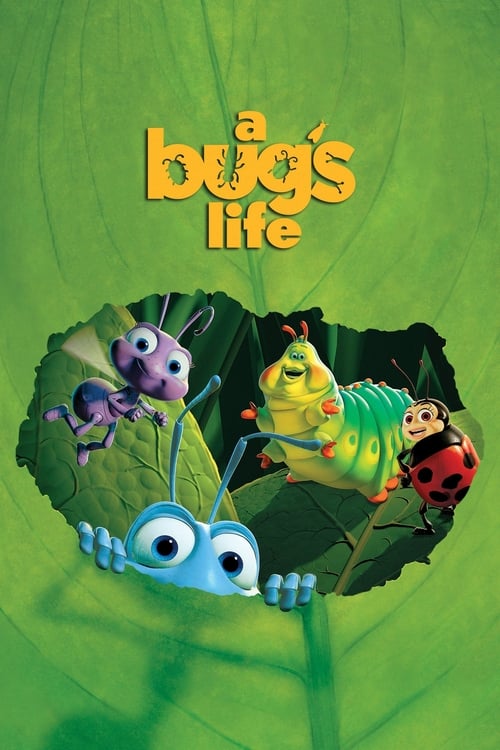
A Bug's Life
1998 · Directed by John Lasseter
Woke Score
CriticCritic Score
Audience
Based
Critics rated this 56 points above its woke score. Among Based films, this critic score ranks #92 of 345.
Representation Casting
Score: 25/100
The voice cast is predominantly white and male. Female characters exist but occupy secondary roles. There is no evident effort to diversify representation beyond what was standard for late-1990s animation.
LGBTQ+ Themes
Score: 0/100
No LGBTQ+ themes, characters, or representation appear in the film. The work is entirely heteronormative and contains no coded or explicit queer content.
Feminist Agenda
Score: 20/100
Female characters (Dot, Atta) are present and occasionally intelligent but remain secondary to the male narrative. The film does not interrogate gender hierarchies or present feminist ideology as central to its worldview.
Racial Consciousness
Score: 5/100
The film contains no racial representation or consciousness. All characters are insects without racial or ethnic markers, which serves as a form of color-blindness rather than genuine inclusion.
Climate Crusade
Score: 0/100
No environmental or climate themes appear in the film. The natural world is presented as backdrop rather than subject of concern or advocacy.
Eat the Rich
Score: 45/100
The film's class dynamics present exploitation and hierarchy as problems requiring overthrow. However, this critique remains superficial and is resolved through individual heroism rather than systemic change or collective consciousness.
Body Positivity
Score: 10/100
The film presents insects with their natural body forms without commentary on beauty standards. However, this is not body positivity advocacy so much as the absence of the concept entirely in 1998 animation.
Neurodivergence
Score: 0/100
No representation of neurodivergence, disability, or mental health appears in the film. Flik is presented as eccentric but not neurodivergent in any contemporary sense.
Revisionist History
Score: 0/100
The film contains no historical content and therefore no revisionist approach to history. It is a fantasy narrative entirely divorced from historical reference.
Lecture Energy
Score: 15/100
The film occasionally verges on preachiness when discussing courage and standing up to authority but generally maintains an entertainment-first posture. There is minimal explicit moralizing despite the thematic material.


Synopsis
On behalf of "oppressed bugs everywhere," an inventive ant named Flik hires a troupe of warrior bugs to defend his bustling colony from a horde of freeloading grasshoppers led by the evil-minded Hopper.
Consciousness Assessment
A Bug's Life arrives at the precipice of modern progressive consciousness without quite stepping over it. The film's premise, which frames an ant colony's labor as oppression and positions revolution as heroic, contains the skeletal structure of class analysis. The grasshoppers function as exploitative overlords extracting tribute from the working ant masses, and Flik's recruitment of circus bugs to overthrow this system reads, intentionally or otherwise, as a call to collective action against hierarchy. Yet the film treats this material with a lightness that prevents any genuine interrogation of systemic power. Hopper is a villain because he is cruel and tyrannical, not because the system itself is unjust. The revolution succeeds because the good bugs are clever and brave, not because the structure of exploitation is fundamentally illegitimate. We are watching a children's film that gestures toward radical critique while remaining conservative about its implications.
The film's approach to gender representation sits in an equally ambiguous space. Dot, the young princess ant voiced by Hayden Panettiere, is presented as intelligent and observant, capable of recognizing Flik's worth when the colony's leadership dismisses him. This is not nothing. Yet the film's female characters remain largely decorative and secondary to the central male narrative of Flik's redemption. Julia Louis-Dreyfus voices Atta, the princess and presumptive heir, who spends much of the film anxious about her fitness for leadership rather than actively wielding power. The film does not interrogate gender hierarchies within the ant colony or suggest that Dot and Atta's femininity is anything but incidental. The female characters are present and occasionally competent, but they exist within a narrative structure that centers male agency and achievement.
The film's cultural moment matters here. Pixar in 1998 was not operating within the constellation of progressive sensibilities that would crystallize in the following two decades. A Bug's Life is a film made before the contemporary vocabulary of social consciousness became the baseline expectation for mainstream entertainment. Its class themes read as accidental rather than intentional, a byproduct of choosing insects as protagonists rather than a deliberate engagement with labor and exploitation. By the standards of its era, it represented something approaching progressivism. By the standards of the present, it is a pleasant artifact of a less self-conscious moment.
Analysis generated by our Consciousness Algorithm
Critic Reviews
“Lasseter and Stanton and the rest of the animators and gagsmiths use the computer with staggering imaginative freedom.”
“All-embracing--funny and silly and tender, full of fun scares and endless sight gags.”
“It's impossible not to be utterly blown away by Pixar's animation.”
“The most pleasure to be had from this high-tech bore is to compare the Disney world-view evidenced here (the triumph of collectivism) with that of DreamWorks’ own creepy-crawler animation, “Antz” (the triumph of individualism).”
Consciousness Markers
The voice cast is predominantly white and male. Female characters exist but occupy secondary roles. There is no evident effort to diversify representation beyond what was standard for late-1990s animation.
No LGBTQ+ themes, characters, or representation appear in the film. The work is entirely heteronormative and contains no coded or explicit queer content.
Female characters (Dot, Atta) are present and occasionally intelligent but remain secondary to the male narrative. The film does not interrogate gender hierarchies or present feminist ideology as central to its worldview.
The film contains no racial representation or consciousness. All characters are insects without racial or ethnic markers, which serves as a form of color-blindness rather than genuine inclusion.
No environmental or climate themes appear in the film. The natural world is presented as backdrop rather than subject of concern or advocacy.
The film's class dynamics present exploitation and hierarchy as problems requiring overthrow. However, this critique remains superficial and is resolved through individual heroism rather than systemic change or collective consciousness.
The film presents insects with their natural body forms without commentary on beauty standards. However, this is not body positivity advocacy so much as the absence of the concept entirely in 1998 animation.
No representation of neurodivergence, disability, or mental health appears in the film. Flik is presented as eccentric but not neurodivergent in any contemporary sense.
The film contains no historical content and therefore no revisionist approach to history. It is a fantasy narrative entirely divorced from historical reference.
The film occasionally verges on preachiness when discussing courage and standing up to authority but generally maintains an entertainment-first posture. There is minimal explicit moralizing despite the thematic material.