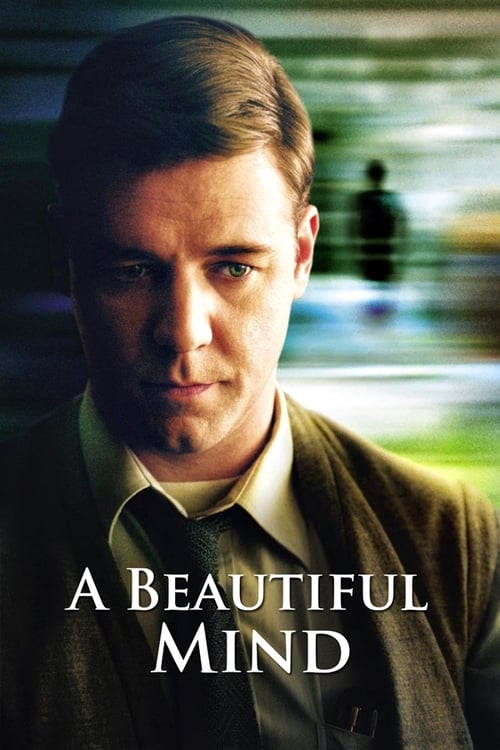
A Beautiful Mind
2001 · Directed by Ron Howard
Woke Score
CriticCritic Score
Audience
Ultra Based
Critics rated this 68 points above its woke score. Among Ultra Based films, this critic score ranks #566 of 1469.
Representation Casting
Score: 0/100
The cast is predominantly white with no meaningful diversity. No indication of intentional representation casting beyond the default mainstream Hollywood practice of the era.
LGBTQ+ Themes
Score: 0/100
No LGBTQ+ themes, characters, or representation present in the film.
Feminist Agenda
Score: 15/100
Jennifer Connelly's character is supportive and emotionally engaged but primarily exists to facilitate Nash's recovery, relying on the traditional 'good woman' redemption trope rather than challenging gender dynamics.
Racial Consciousness
Score: 0/100
No engagement with racial themes or consciousness; the film operates within an all-white institutional setting without acknowledgment or examination of this particularity.
Climate Crusade
Score: 0/100
No climate-related themes or messaging present.
Eat the Rich
Score: 0/100
No critique of capitalism or wealth structures; the film accepts institutional hierarchies and elite academic settings without question.
Body Positivity
Score: 0/100
No engagement with body positivity or body image issues.
Neurodivergence
Score: 20/100
While the film centers on a character with schizophrenia, it treats the condition as something to be overcome or managed into invisibility rather than exploring neurodiversity as a valid way of being.
Revisionist History
Score: 0/100
No revisionist reframing of historical events; the film adapts a biographical narrative without interrogating established historical narratives.
Lecture Energy
Score: 0/100
While the film contains exposition about Nash's mathematical concepts, it does not deploy preachy messaging about contemporary social justice issues.


Synopsis
From the heights of notoriety to the depths of depravity, John Forbes Nash Jr. experiences it all. As a brilliant but socially awkward mathematician, he made a groundbreaking discovery early in his career and stands on the brink of international acclaim. But as the handsome and arrogant Nash accepts secret work in cryptography, he becomes entangled in a mysterious conspiracy. His life takes a nightmarish turn and he soon finds himself on a painful and harrowing journey of self-discovery.
Consciousness Assessment
A Beautiful Mind is a film that has aged into an instructive artifact of early 2000s sensibilities regarding mental illness and gender. Ron Howard's earnest biopic treats schizophrenia as a serious subject worthy of mainstream attention, which we might credit as progressive for its era. However, the film's approach to these themes would not survive modern scrutiny. The narrative structure, which deploys the "healing power of a good woman" as a central redemptive force, relies on a deeply traditional gender dynamic that positions Jennifer Connelly's Alicia Nash as primarily supportive rather than agentive. Her character exists in the emotional infrastructure of Nash's recovery, a familiar trope that has been thoroughly interrogated in contemporary film criticism.
The film's treatment of mental illness, while sympathetic, actually reinforces several enduring myths about severe psychiatric conditions. Critics have noted that it perpetuates the romanticized link between genius and madness, suggesting that Nash's brilliance is inextricably bound to his illness in ways that are both narratively convenient and clinically misleading. The portrayal of psychiatric treatment, particularly the insulin shock therapy sequences, emphasizes brutality without complicating the film's overall message about Nash's capacity to overcome his condition through willpower and romantic devotion. This framework reflects a pre-modern understanding of mental health that we would now recognize as potentially harmful.
From the perspective of contemporary cultural analysis, A Beautiful Mind offers little of what we might identify as progressive sensibility. The cast is predominantly white, the power structures remain unexamined, and the film's worldview is individualistic instead of systemic in its approach to social problems. It is a film made by and for an establishment that saw mental illness as a personal tragedy to be overcome, not as part of a broader conversation about disability rights, neurodiversity, or systemic barriers. Its Oscar sweep in 2002 says more about the cultural moment than it does about any particular achievement in social consciousness.
Analysis generated by our Consciousness Algorithm
Critic Reviews
“The result is mainstream moviemaking at its highest, most satisfying level.”
“Inspiring and largely unsentimental, this is as much a love story as a tale of courage.”
“Crowe brings the character to life by sidestepping sensationalism and building with small behavioral details.”
“It's not just our emotions that are being played on here, it's not just our intelligence being insulted because of Ron Howard and Akiva Goldsman's presumption that we won't have any interest in a character whom it's not always possible to like. It's John Nash's life, being turned into an Oscar machine and an easy way to jerk tears.”
Consciousness Markers
The cast is predominantly white with no meaningful diversity. No indication of intentional representation casting beyond the default mainstream Hollywood practice of the era.
No LGBTQ+ themes, characters, or representation present in the film.
Jennifer Connelly's character is supportive and emotionally engaged but primarily exists to facilitate Nash's recovery, relying on the traditional 'good woman' redemption trope rather than challenging gender dynamics.
No engagement with racial themes or consciousness; the film operates within an all-white institutional setting without acknowledgment or examination of this particularity.
No climate-related themes or messaging present.
No critique of capitalism or wealth structures; the film accepts institutional hierarchies and elite academic settings without question.
No engagement with body positivity or body image issues.
While the film centers on a character with schizophrenia, it treats the condition as something to be overcome or managed into invisibility rather than exploring neurodiversity as a valid way of being.
No revisionist reframing of historical events; the film adapts a biographical narrative without interrogating established historical narratives.
While the film contains exposition about Nash's mathematical concepts, it does not deploy preachy messaging about contemporary social justice issues.