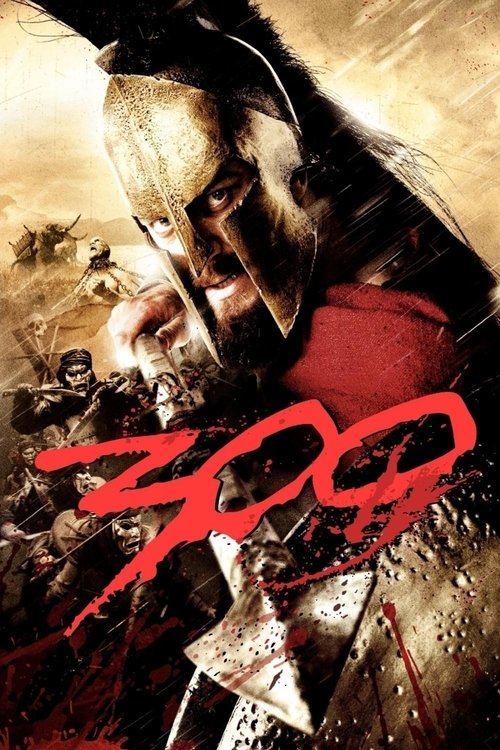
300
2007 · Directed by Zack Snyder
Woke Score
CriticCritic Score
Audience
Ultra Based
Critics rated this 48 points above its woke score. Among Ultra Based films, this critic score ranks #1108 of 1469.
Representation Casting
Score: 15/100
The cast is predominantly white European actors, with the Persians relegated to dehumanized background roles. No meaningful representation of diverse ethnicities in significant roles.
LGBTQ+ Themes
Score: 5/100
Homosocial bonding between male warriors exists but is never acknowledged as anything other than martial brotherhood. No LGBTQ+ themes or representation present.
Feminist Agenda
Score: 10/100
Female characters are minimal and largely passive. Queen Gorgo has moments of agency but exists primarily as a device for male anxiety and plot motivation.
Racial Consciousness
Score: 8/100
The film actively stereotypes Persians as barbaric, exotic, and effeminate in contrast to noble Greeks. This is presented uncritically as historical fact rather than examined as bias.
Climate Crusade
Score: 0/100
No climate or environmental themes present in this historical action film.
Eat the Rich
Score: 5/100
The film celebrates martial hierarchy and warrior culture without any critique of power structures or economic systems.
Body Positivity
Score: 0/100
The film celebrates an extremely narrow and exaggerated body type as the masculine ideal, offering no space for diverse body representation.
Neurodivergence
Score: 0/100
No representation of neurodivergence or disability present in the film.
Revisionist History
Score: 35/100
The film heavily revises history to glorify Sparta and demonize Persia, presenting a propagandistic version of events as entertainment.
Lecture Energy
Score: 5/100
The film does not lecture about progressive values. It is an action spectacle with minimal dialogue, though its ideological commitments are implicit throughout.


Synopsis
Based on Frank Miller's graphic novel, "300" is very loosely based the 480 B.C. Battle of Thermopylae, where the King of Sparta led his army against the advancing Persians; the battle is said to have inspired all of Greece to band together against the Persians, and helped usher in the world's first democracy.
Consciousness Assessment
Zack Snyder's "300" arrives as a historical fantasy masquerading as epic drama, a film so devoted to the exaggeration of Spartan heroism that it achieves a kind of accidental honesty about its own ideological commitments. The Persians are rendered as an undifferentiated mass of dehumanized exoticism, their bodies contorted and their culture flattened into a backdrop for the celebration of Western martial virtue. This is not sophisticated storytelling. It is the visual equivalent of a fever dream about masculine superiority, executed with sufficient technical proficiency that one cannot dismiss it as incompetent.
The film's approach to gender and sexuality deserves particular attention. Female characters exist primarily as vessels for male anxiety and desire, while the Spartan warriors bond through a homosocial intensity that borders on the homoerotic, yet the film treats this bonding as purely martial rather than examining what it might mean. The hypermasculinity on display is not critiqued but celebrated, rendered through stylized violence and exaggerated musculature as an ideal rather than an excess. We are meant to admire these bodies and their brutality without question.
What emerges is a work that embodies certain cultural attitudes circa 2007 without attempting to interrogate them. The film is not progressive by any measure, nor does it pretend to be. It stands as a monument to a particular strain of action cinema that treats racial othering and uncomplicated machismo as entertainment. Whether one finds this entertaining or repellent, the film's ideological commitments are not obscured by any pretense of complexity.
Analysis generated by our Consciousness Algorithm
Critic Reviews
“We've seen plenty of sword-and-sandal epics, full of robustly virile men fighting like real men against other men. But we've never seen those hyper-macho mechanics presented with the brutal beauty and thrilling finesse of 300, clearly the best film of 2007 so far.”
“Director Zack Snyder uses his computers to create ferocious and painterly images, with as much attention to each frame as a hand-drawn panel.”
“300 is a feast for the senses (well, two of them anyway) and an impressive technical achievement. More than that, it's a hell of a lot of fun.”
“It's a ponderous, plodding, visually dull picture, but the blame shouldn't be put on Snyder's skills per se, and has nothing to do with his ambition to blur the distinction between CGI and photography. Frankly, it's the slavish, frame-by-frame devotion to Miller's source material that's the problem.”
Consciousness Markers
The cast is predominantly white European actors, with the Persians relegated to dehumanized background roles. No meaningful representation of diverse ethnicities in significant roles.
Homosocial bonding between male warriors exists but is never acknowledged as anything other than martial brotherhood. No LGBTQ+ themes or representation present.
Female characters are minimal and largely passive. Queen Gorgo has moments of agency but exists primarily as a device for male anxiety and plot motivation.
The film actively stereotypes Persians as barbaric, exotic, and effeminate in contrast to noble Greeks. This is presented uncritically as historical fact rather than examined as bias.
No climate or environmental themes present in this historical action film.
The film celebrates martial hierarchy and warrior culture without any critique of power structures or economic systems.
The film celebrates an extremely narrow and exaggerated body type as the masculine ideal, offering no space for diverse body representation.
No representation of neurodivergence or disability present in the film.
The film heavily revises history to glorify Sparta and demonize Persia, presenting a propagandistic version of events as entertainment.
The film does not lecture about progressive values. It is an action spectacle with minimal dialogue, though its ideological commitments are implicit throughout.