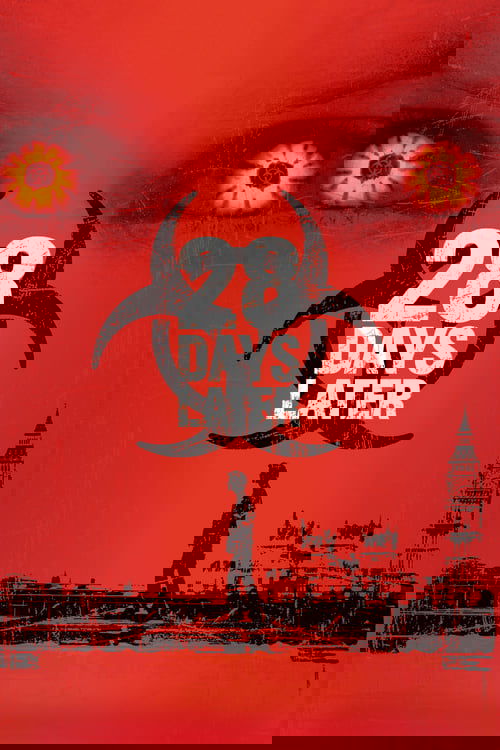
28 Days Later
2002 · Directed by Danny Boyle
Woke Score
Critic Score
Audience
Ultra Based
Critics rated this 77 points above its woke score. Among Ultra Based films, this critic score ranks #310 of 833.
Representation Casting
Score: 15/100
Naomie Harris appears in a significant role reflecting British demographics, but her casting reflects practical storytelling rather than conscious representation politics.
LGBTQ+ Themes
Score: 0/100
No LGBTQ+ characters, themes, or subtext present in the film.
Feminist Agenda
Score: 25/100
Selena is a capable survivor and decision-maker, but this reflects narrative necessity rather than feminist ideological positioning.
Racial Consciousness
Score: 0/100
No racial consciousness or commentary. Character diversity exists without self-conscious annotation.
Climate Crusade
Score: 0/100
No climate themes or environmental commentary present in the film.
Eat the Rich
Score: 35/100
The film depicts institutional failure through research facility negligence, but this functions as thriller premise rather than ideological anti-capitalism.
Body Positivity
Score: 0/100
The infected are designed as grotesque threats for horror effect, not as body positivity commentary.
Neurodivergence
Score: 0/100
No representation of or commentary on neurodivergence.
Revisionist History
Score: 0/100
Not a historical film. No revisionist historical elements present.
Lecture Energy
Score: 15/100
Thematic elements about civilization's fragility emerge from narrative rather than being didactically imposed on the viewer.


Synopsis
Twenty-eight days after a killer virus was accidentally unleashed from a British research facility, a small group of London survivors are caught in a desperate struggle to protect themselves from the infected. Carried by animals and humans, the virus turns those it infects into homicidal maniacs -- and it's absolutely impossible to contain.
Consciousness Assessment
Danny Boyle's "28 Days Later" exists in a cultural moment before the contemporary constellation of progressive sensibilities had crystallized into a codified aesthetic. This 2002 film contains thematic weight about institutional failure and the fragility of civilization, yet these elements emerge organically from the narrative rather than being imposed as ideological statements. The virus escapes from a research facility through human negligence, but this functions as a thriller premise rather than anti-capitalist commentary. Naomie Harris delivers a capable performance as Selena, a survivor of genuine competence, but her character reflects practical storytelling needs rather than conscious representation politics. She simply must be effective to survive. The film's social commentary remains incidental to its primary purpose as a visceral horror experience.
What distinguishes this film from genuinely progressive media is its refusal to self-consciously announce its values. There is no lecture energy, no didactic insistence on moral lessons about society's failures. The collapse of civilization and the revelation of human brutality under pressure are presented as tragic inevitabilities rather than cautionary tales aimed at reforming the viewer's consciousness. The infected are grotesque by design for horror effect, not as commentary on body acceptance. The cast reflects Britain's actual demographics without performative celebration of that fact. This is cinema from before progressive sensibilities became a self-conscious cultural project, when storytelling could simply depict human struggle without constant reference to its social meaning.
The film's resistance to contemporary progressive markers does not diminish its quality as cinema. Rather, it demonstrates that serious thematic engagement with human nature, morality, and societal collapse can exist entirely outside the framework of modern social justice consciousness. "28 Days Later" succeeds because it commits fully to its genre and narrative, not because it advances particular ideological positions. For those seeking cultural commentary through the lens of contemporary progressive aesthetics, this is not the film to examine.
Analysis generated by our Consciousness Algorithm
Critic Reviews
“This is finally the zombie flick as cautionary political tale, and as humanist parable. It's not the flesh-gouging zombie we have to worry about, the filmmakers suggest, but the soul-gouging zombie within.”
“A first-rate zombie movie. The best tribute I can offer is that it makes you want to go out directly afterward and down some expensive single-malt scotch.”
“At once an old-fashioned freakout and an environmental cautionary tale (mess with Mother Nature and she'll mess with you right back), the film combines two genre standbys -- lethal contagion and the undead -- and gives them a wicked, contemporary spin.”
“Rarely has so scary a thriller been so well made, and never has digital video -- by the English cinematographer Anthony Dod Mantle -- been put to grittier use.”
“Boyle and screenwriter Alex Garland plumb the violence of the mind with slashing wit and shocking gravity. Happy nightmares.”
“In place of elaborate sets, clever filmmaking gives the impression of a central London emptied of people and cars, to eerie effect - and this opening reel is nothing short of magnificent.”
Consciousness Markers
Naomie Harris appears in a significant role reflecting British demographics, but her casting reflects practical storytelling rather than conscious representation politics.
No LGBTQ+ characters, themes, or subtext present in the film.
Selena is a capable survivor and decision-maker, but this reflects narrative necessity rather than feminist ideological positioning.
No racial consciousness or commentary. Character diversity exists without self-conscious annotation.
No climate themes or environmental commentary present in the film.
The film depicts institutional failure through research facility negligence, but this functions as thriller premise rather than ideological anti-capitalism.
The infected are designed as grotesque threats for horror effect, not as body positivity commentary.
No representation of or commentary on neurodivergence.
Not a historical film. No revisionist historical elements present.
Thematic elements about civilization's fragility emerge from narrative rather than being didactically imposed on the viewer.