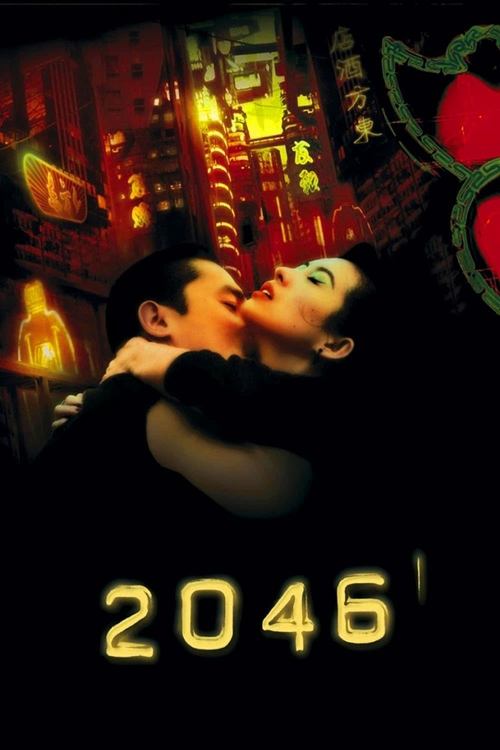
2046
2004 · Directed by Wong Kar-Wai
Woke Score
CriticCritic Score
Audience
Ultra Based
Critics rated this 70 points above its woke score. Among Ultra Based films, this critic score ranks #413 of 1469.
Representation Casting
Score: 15/100
Diverse Asian ensemble cast with substantial roles for women, but representation is not framed through contemporary progressive consciousness. Characters exist within the narrative rather than as subjects of social awareness.
LGBTQ+ Themes
Score: 0/100
No LGBTQ+ themes, representation, or subtext present in the film.
Feminist Agenda
Score: 20/100
Multiple female characters with agency and emotional depth, but treated through a romantic and nostalgic lens rooted in mid-century aesthetics rather than contemporary feminist critique.
Racial Consciousness
Score: 5/100
Film engages with Hong Kong's post-handover identity anxieties, but presents these as existential and personal rather than as explicit racial or political consciousness in the modern sense.
Climate Crusade
Score: 0/100
No environmental or climate themes present in the film.
Eat the Rich
Score: 0/100
No critique of capitalism, wealth inequality, or economic systems evident in the narrative or themes.
Body Positivity
Score: 0/100
No engagement with body image, disability representation, or body diversity messaging in the film.
Neurodivergence
Score: 0/100
No representation of neurodivergence, mental disability, or neurodivergent characters present.
Revisionist History
Score: 10/100
Film engages with Hong Kong's historical memory and personal nostalgia, but does not make explicit revisionist historical claims. History is treated as subjective memory rather than ideological correction.
Lecture Energy
Score: 5/100
Wong Kar-wai's style is deliberately atmospheric and mood-driven rather than preachy or pedagogical, though the film does contemplate philosophical themes of time and loss.


Synopsis
Women enter and exit a science fiction author's life over the course of a few years after the author loses the woman he considers his one true love.
Consciousness Assessment
Wong Kar-wai's 2046 is a shimmering meditation on love, loss, and temporal displacement that exists in almost complete indifference to the cultural preoccupations of the 2020s. The film is structured as a series of fragmentary romantic encounters filtered through the consciousness of a science fiction writer, a narrative choice that prioritizes aesthetic atmosphere and emotional texture over any recognizable engagement with social consciousness. The multiple female characters possess depth and agency within their romantic entanglements, but they function as vessels for the protagonist's nostalgia rather than as subjects of contemporary progressive concern. The film's true subject is the anxiety of Hong Kong itself, caught between its colonial past and its absorption into mainland China, a political reality that the film addresses through the language of memory and melancholy rather than explicit ideological commentary. What emerges from Wong's characteristic visual style is a work fundamentally uninterested in the categories that preoccupy modern progressive cinema. The film makes no attempt to interrogate its own treatment of gender, race, or history through a lens of social justice. It is simply too absorbed in its own formally experimental exploration of time to notice, or care, whether it meets the requirements of contemporary consciousness. This indifference to external judgment is precisely what makes it a work of genuine artistic vision, even if that vision places it entirely outside the scope of what we are attempting to measure.
Analysis generated by our Consciousness Algorithm
Critic Reviews
“Filmed to perfection by the great Christopher Doyle and others.”
“Like Hitchcock, Mr. Wong is at once a voyeur and fetishist par excellence.”
“I'm glad that 2046 is different from "Mood" even while being strangely of a piece with it. Like "Mood," it’s a movie of utter wonder and ravishment. But the key here is different.”
“It takes what could be called the Chinese equivalent of chutzpah to make a movie with three of the world's most beautiful and talented women -- Gong Li, Maggie Cheung and Zhang Ziyi -- and to be more interested in the male character.”
Consciousness Markers
Diverse Asian ensemble cast with substantial roles for women, but representation is not framed through contemporary progressive consciousness. Characters exist within the narrative rather than as subjects of social awareness.
No LGBTQ+ themes, representation, or subtext present in the film.
Multiple female characters with agency and emotional depth, but treated through a romantic and nostalgic lens rooted in mid-century aesthetics rather than contemporary feminist critique.
Film engages with Hong Kong's post-handover identity anxieties, but presents these as existential and personal rather than as explicit racial or political consciousness in the modern sense.
No environmental or climate themes present in the film.
No critique of capitalism, wealth inequality, or economic systems evident in the narrative or themes.
No engagement with body image, disability representation, or body diversity messaging in the film.
No representation of neurodivergence, mental disability, or neurodivergent characters present.
Film engages with Hong Kong's historical memory and personal nostalgia, but does not make explicit revisionist historical claims. History is treated as subjective memory rather than ideological correction.
Wong Kar-wai's style is deliberately atmospheric and mood-driven rather than preachy or pedagogical, though the film does contemplate philosophical themes of time and loss.