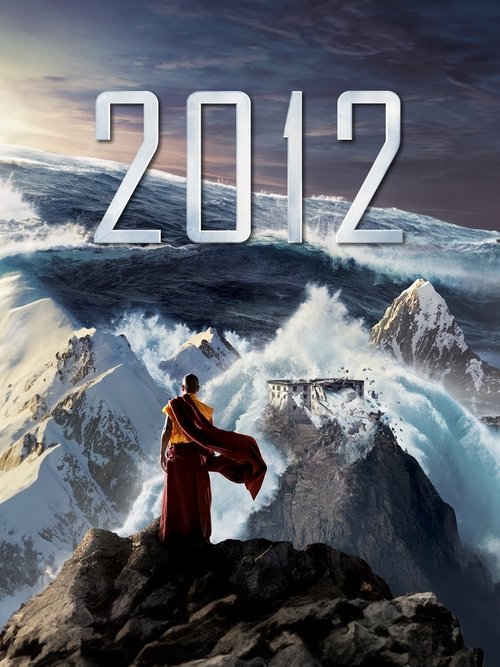
2012
2009 · Directed by Roland Emmerich
Woke Score
CriticCritic Score
Audience
Based
Critics rated this 21 points above its woke score. Among Based films, this critic score ranks #310 of 345.
Representation Casting
Score: 45/100
The film features actors of color in substantive roles, including Chiwetel Ejiofor as a lead character and Thandiwe Newton in a significant position. However, the casting appears motivated by commercial demographics rather than any deliberate commitment to representation.
LGBTQ+ Themes
Score: 0/100
The film contains no LGBTQ+ themes, characters, or representation of any kind. This is a heteronormative family survival narrative.
Feminist Agenda
Score: 15/100
Female characters exist in the narrative but primarily in supporting roles. Amanda Peet functions as a love interest and mother figure. The film makes no effort to examine gender dynamics or challenge traditional family structures.
Racial Consciousness
Score: 20/100
While the film includes actors of color, it demonstrates no awareness of or engagement with racial dynamics. The characters exist within the story but their racial identity is never acknowledged or explored.
Climate Crusade
Score: 35/100
The film's central premise involves planetary catastrophe triggered by solar radiation, but it treats climate and environmental concerns purely as spectacle. There is no meaningful engagement with environmental responsibility or climate science.
Eat the Rich
Score: 50/100
The film's plot structure inadvertently critiques wealth inequality by depicting a literal two-tier survival system where the rich buy passage on arks while others die. However, this is presented without irony or critical intent, making it more accident than argument.
Body Positivity
Score: 5/100
The film conforms entirely to conventional Hollywood standards regarding body representation. There is no engagement with body diversity or body positivity themes.
Neurodivergence
Score: 0/100
No characters with neurodivergence are depicted or referenced. The film shows no awareness of this dimension of human diversity.
Revisionist History
Score: 0/100
As a contemporary disaster film, 2012 does not engage with historical narratives or attempt to reframe historical events.
Lecture Energy
Score: 15/100
While the film includes expository dialogue about geophysical phenomena, it avoids the pedagogical tone characteristic of more overtly message-driven cinema. The exposition exists to justify the disaster sequences rather than to educate.


Synopsis
Dr. Adrian Helmsley, part of a worldwide geophysical team investigating the effect on the earth of radiation from unprecedented solar storms, learns that the earth's core is heating up. He warns U.S. President Thomas Wilson that the crust of the earth is becoming unstable and that without proper preparations for saving a fraction of the world's population, the entire race is doomed. Meanwhile, writer Jackson Curtis stumbles on the same information. While the world's leaders race to build "arks" to escape the impending cataclysm, Curtis struggles to find a way to save his family. Meanwhile, volcanic eruptions and earthquakes of unprecedented strength wreak havoc around the world.
Consciousness Assessment
Roland Emmerich's 2012 functions as an inadvertent critique of global inequality, though the film itself remains blissfully unaware of the implications it presents. The central conflict hinges on a fundamental class divide: wealthy elites board secret "arks" to survive the apocalypse while ordinary citizens are left to perish, and our protagonist must navigate this system to save his family. The film's treatment of this scenario is played entirely for spectacle rather than moral examination. We watch buildings crumble and continents sink without a whisper of irony about who gets saved and who doesn't.
The casting deserves modest credit. Chiwetel Ejiofor and Thandiwe Newton occupy prominent roles as competent professionals, though their characters function primarily as plot devices within Emmerich's familiar disaster framework. The film makes no particular effort to center their experiences or perspectives, nor does it engage in any meaningful reflection on systemic barriers they might face. They are simply there, delivering exposition between sequences of implausible destruction.
What ultimately prevents this film from scoring higher on our scale is its complete indifference to its own subtext. The film presents a world where the wealthy literally buy their way to safety while the masses face annihilation, yet it treats this as mere backdrop for action sequences rather than something worthy of critical examination. This is not progressive cinema accidentally stumbling into social commentary. This is a disaster film that discovered a class system and promptly ignored it in favor of more explosions. The environmental catastrophe at the film's core, while ostensibly related to climate concerns, exists solely as a doomsday scenario divorced from any actual analysis of planetary crisis.
Analysis generated by our Consciousness Algorithm
Critic Reviews
“There's something to be said for a formula picture done almost to perfection. In 2012, Emmerich gives you everything you expect, but gives it to you bigger.”
“2012 takes the disaster movie -- once content simply to threaten the Earth with a comet, or blow up the White House -- to its natural conclusion, the literal end of the world.”
“The mother of all disaster movies (and the father, and the extended family) spends half an hour on ominous set-up scenes (scientists warn, strange events occur, prophets rant and of course a family is introduced) and then unleashes two hours of cataclysmic special events hammering the Earth relentlessly.”
“As always in Emmerich's rollicking Armageddons, the cannon speaks with an expensive bang, while the fodder gets afforded nary a whimper. Of course, that's just part of disaster's simple recipe: Blow us up, then blow us off.”
Consciousness Markers
The film features actors of color in substantive roles, including Chiwetel Ejiofor as a lead character and Thandiwe Newton in a significant position. However, the casting appears motivated by commercial demographics rather than any deliberate commitment to representation.
The film contains no LGBTQ+ themes, characters, or representation of any kind. This is a heteronormative family survival narrative.
Female characters exist in the narrative but primarily in supporting roles. Amanda Peet functions as a love interest and mother figure. The film makes no effort to examine gender dynamics or challenge traditional family structures.
While the film includes actors of color, it demonstrates no awareness of or engagement with racial dynamics. The characters exist within the story but their racial identity is never acknowledged or explored.
The film's central premise involves planetary catastrophe triggered by solar radiation, but it treats climate and environmental concerns purely as spectacle. There is no meaningful engagement with environmental responsibility or climate science.
The film's plot structure inadvertently critiques wealth inequality by depicting a literal two-tier survival system where the rich buy passage on arks while others die. However, this is presented without irony or critical intent, making it more accident than argument.
The film conforms entirely to conventional Hollywood standards regarding body representation. There is no engagement with body diversity or body positivity themes.
No characters with neurodivergence are depicted or referenced. The film shows no awareness of this dimension of human diversity.
As a contemporary disaster film, 2012 does not engage with historical narratives or attempt to reframe historical events.
While the film includes expository dialogue about geophysical phenomena, it avoids the pedagogical tone characteristic of more overtly message-driven cinema. The exposition exists to justify the disaster sequences rather than to educate.