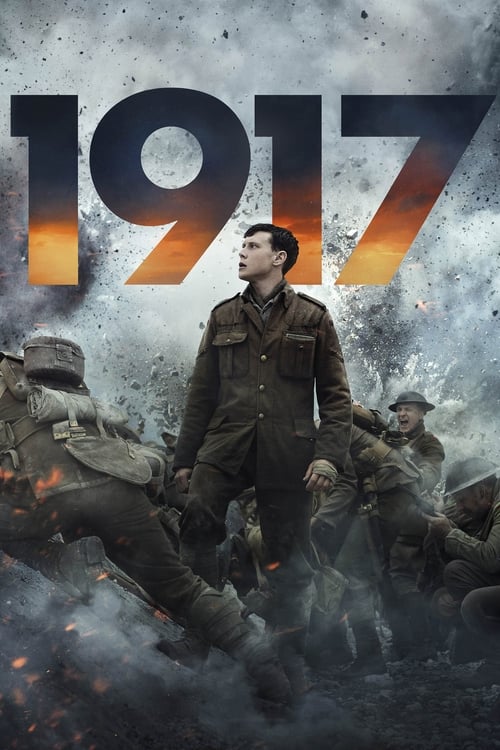
1917
2019 · Directed by Sam Mendes
Woke Score
CriticCritic Score
Audience
Ultra Based
Critics rated this 74 points above its woke score. Among Ultra Based films, this critic score ranks #408 of 1469.
Representation Casting
Score: 15/100
The film includes a Sikh soldier in a historically accurate WWI setting, but this remains a minor presence in an otherwise predominantly white British cast with no thematic engagement around this representation.
LGBTQ+ Themes
Score: 0/100
No LGBTQ+ themes, characters, or storylines present in the film.
Feminist Agenda
Score: 0/100
The film is entirely male-centered with virtually no female characters of any significance to the narrative.
Racial Consciousness
Score: 10/100
While the Sikh soldier's presence generated discussion about diversity, the film itself does not engage in explicit racial commentary or exploration of colonialism and imperial history.
Climate Crusade
Score: 0/100
No environmental or climate-related themes appear in this military narrative.
Eat the Rich
Score: 0/100
The film contains no critique of capitalism or wealth inequality; it is a traditional war narrative.
Body Positivity
Score: 0/100
No body positivity themes or representation of diverse body types beyond standard military casting.
Neurodivergence
Score: 0/100
No neurodivergent characters or representation present in the film.
Revisionist History
Score: 5/100
While inspired by true events, the film presents a conventional war narrative without substantial reframing or progressive reinterpretation of historical events.
Lecture Energy
Score: 0/100
The film prioritizes technical spectacle and military action over delivering any progressive messaging or moral lectures.


Synopsis
At the height of the First World War, two young British soldiers must cross enemy territory and deliver a message that will stop a deadly attack on hundreds of soldiers.
Consciousness Assessment
Sam Mendes' 1917 is fundamentally a technical exercise in filmmaking rather than a vehicle for cultural messaging. The single-take aesthetic, achieved through Roger Deakins' masterful cinematography, demands and receives nearly all of the film's conceptual energy. What remains is a straightforward World War I narrative focused on two young soldiers completing a mission, rendered with considerable visual precision but minimal thematic ambition beyond the spectacle of war itself.
The film's only notable element in the sphere of contemporary cultural consciousness is the inclusion of a Sikh soldier in the cast, a historically accurate detail that nonetheless generated outsized controversy when certain critics questioned its authenticity. This became the entire conversation around representation in the film, which speaks to both the film's general indifference to such matters and the hunger among some audiences to police diversity. The Sikh soldier appears briefly and functions within the narrative without commentary or special pleading, which is to say the film treats him as simply another soldier rather than as a statement about colonial inclusion or imperial history.
The film's woke score is low because it lacks nearly all markers of contemporary progressive sensibility. There are no LGBTQ+ themes, feminist elements, climate consciousness, anti-capitalist critique, body positivity, neurodivergent representation, or lecture-energy moralizing. It is a war film made in 2019 that behaves like a war film made in 1999, prioritizing technical achievement and male-centered action over any engagement with modern social consciousness. This is not a criticism of the film's artistic merit, merely an observation that its cultural awareness registers at the level of ambient noise.
Analysis generated by our Consciousness Algorithm
Critic Reviews
“1917 is Mendes’s most purely ambitious and passionate picture since his misunderstood and under-appreciated Jarhead of 2005. It’s bold, thrilling film-making.”
“1917 is a modern war classic and one of the best movies of the year.”
“The long-shot is hardly a novelty — as it so often tends to be wielded in Hollywood — but a point of view — a feeling even. And rarely, if ever, has that style been so affecting and executed so beautifully.”
“The so-called long take serves as a mask—a gross bit of earnest showmanship that both conceals and reflects the trickery and the cheap machinations of the script, the shallowness of the direction of the actors, and the brazenly superficial and emotion-dictating music score.”
Consciousness Markers
The film includes a Sikh soldier in a historically accurate WWI setting, but this remains a minor presence in an otherwise predominantly white British cast with no thematic engagement around this representation.
No LGBTQ+ themes, characters, or storylines present in the film.
The film is entirely male-centered with virtually no female characters of any significance to the narrative.
While the Sikh soldier's presence generated discussion about diversity, the film itself does not engage in explicit racial commentary or exploration of colonialism and imperial history.
No environmental or climate-related themes appear in this military narrative.
The film contains no critique of capitalism or wealth inequality; it is a traditional war narrative.
No body positivity themes or representation of diverse body types beyond standard military casting.
No neurodivergent characters or representation present in the film.
While inspired by true events, the film presents a conventional war narrative without substantial reframing or progressive reinterpretation of historical events.
The film prioritizes technical spectacle and military action over delivering any progressive messaging or moral lectures.