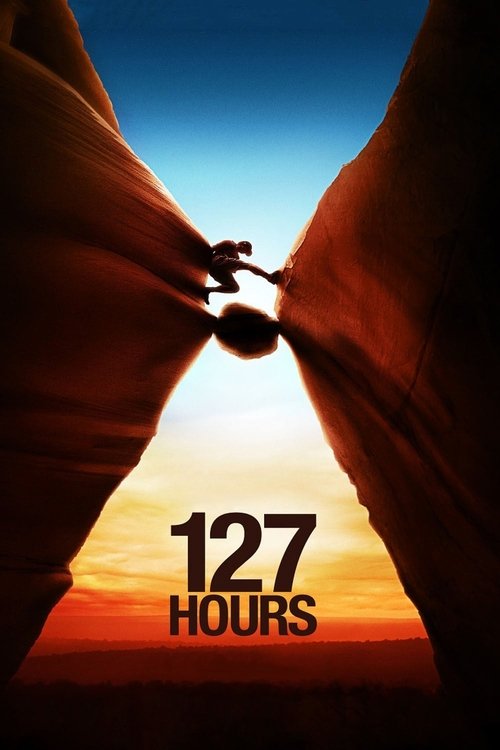
127 Hours
2010 · Directed by Danny Boyle
Woke Score
Critic Score
Audience
Ultra Based
Critics rated this 98 points above its woke score. Among Ultra Based films, this critic score ranks #154 of 833.
Representation Casting
Score: 0/100
The cast is predominantly white with no consideration given to diverse representation. Supporting roles are limited and the film contains no engagement with casting as a social issue.
LGBTQ+ Themes
Score: 0/100
No LGBTQ+ themes, characters, or representation appear in the film. The narrative is entirely focused on individual survival.
Feminist Agenda
Score: 0/100
While female characters appear briefly, they serve only as memories or background elements. The film contains no feminist themes or commentary on gender.
Racial Consciousness
Score: 0/100
The film presents no engagement with race or racial dynamics. It treats the survival story as a universal individual experience.
Climate Crusade
Score: 0/100
Despite being set in a natural canyon environment, the film contains no environmental messaging or climate-related commentary.
Eat the Rich
Score: 0/100
There is no critique of wealth, class, or economic systems. The film remains apolitical regarding capitalism.
Body Positivity
Score: 0/100
The amputation is treated as a tragic necessity for survival rather than through any body positivity framework. No commentary on body acceptance appears.
Neurodivergence
Score: 0/100
Ralston's psychological experience is presented as universal human response to trauma, with no engagement with neurodivergent identity or representation.
Revisionist History
Score: 0/100
The film adapts a recent true story from 2003 without revisionism. It presents events as they occurred without reinterpreting history.
Lecture Energy
Score: 0/100
While the film explores existential themes about survival and human will, it does not adopt a didactic tone designed to educate about progressive social positions.


Synopsis
The true story of mountain climber Aron Ralston's remarkable adventure to save himself after a fallen boulder crashes on his arm and traps him in an isolated canyon in Utah.
Consciousness Assessment
127 Hours stands as a monument to the apolitical survival narrative, a film so determinedly focused on individual willpower that it achieves a kind of purity in its refusal to engage with broader social currents. Danny Boyle's kinetic direction transforms what could have been a claustrophobic ordeal into something almost euphoric, all split-screens and visual flourishes that suggest the mind of a man fragmenting and reconstituting itself. Yet this aesthetic ambition never translates into social consciousness. James Franco's performance carries the entire weight of the film, and we are asked only to marvel at his endurance, not to consider anything about how representation, identity, or systemic forces might shape human experience.
The film's premise is that survival is a purely individual matter, a test of will against geology. There are no critiques here of capitalism, no meditation on environmental degradation despite the canyon setting, no engagement with the gendered nature of risk-taking or the racial demographics of outdoor recreation. The supporting female characters exist only as memories or brief flashbacks, their narrative function exhausted in their absence. This is not a moral failing so much as a statement of artistic intention. Boyle and screenwriter Simon Beaufoy chose to make a story about a man alone, and they executed that choice with considerable technical skill.
127 Hours belongs to an earlier era when survival stories could be simply about survival, when a true story adaptation could treat events as they occurred without considering how they might reflect on broader patterns of privilege, identity, or systemic inequality. Released in 2010, it predates our current moment of social consciousness entirely. The film received six Oscar nominations but won nothing, and its legacy remains that of a well-crafted technical achievement rather than a cultural statement. For those seeking markers of progressive social sensibility, this film offers only silence.
Analysis generated by our Consciousness Algorithm
Critic Reviews
“A true-life adventure that turns into a one-man disaster movie - and the darker it gets, the more enthralling it becomes.”
“Like all great movies, 127 Hours takes us on a memorable journey. Which is not easy when 90 percent of the movie takes place with a virtually immobile hero in a very cramped setting.”
“Only a truly visionary filmmaker could take a story largely set in a cramped canyon and give it a sense of openness and hope.”
“127 Hours -- just like "Slumdog Millionaire" -- is a masterful slice of four-star cinema, featuring an irresistible performance by James Franco, breathtaking cinematography, and the kind of deep, searching soul that is absent from so much of what comes out of Hollywood.”
“For a story about a man who cannot move, the ordeal unfolds at a pace that keeps you breathless.”
Consciousness Markers
The cast is predominantly white with no consideration given to diverse representation. Supporting roles are limited and the film contains no engagement with casting as a social issue.
No LGBTQ+ themes, characters, or representation appear in the film. The narrative is entirely focused on individual survival.
While female characters appear briefly, they serve only as memories or background elements. The film contains no feminist themes or commentary on gender.
The film presents no engagement with race or racial dynamics. It treats the survival story as a universal individual experience.
Despite being set in a natural canyon environment, the film contains no environmental messaging or climate-related commentary.
There is no critique of wealth, class, or economic systems. The film remains apolitical regarding capitalism.
The amputation is treated as a tragic necessity for survival rather than through any body positivity framework. No commentary on body acceptance appears.
Ralston's psychological experience is presented as universal human response to trauma, with no engagement with neurodivergent identity or representation.
The film adapts a recent true story from 2003 without revisionism. It presents events as they occurred without reinterpreting history.
While the film explores existential themes about survival and human will, it does not adopt a didactic tone designed to educate about progressive social positions.