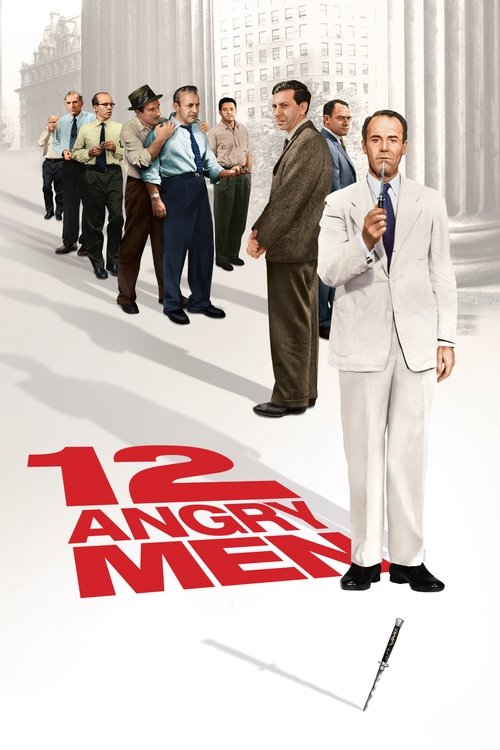
12 Angry Men
1957 · Directed by Sidney Lumet
Woke Score
CriticCritic Score
Audience
Ultra Based
Critics rated this 79 points above its woke score. Among Ultra Based films, this critic score ranks #33 of 1469.
Representation Casting
Score: 15/100
The jury includes two men of color in historically accurate 1950s casting, but the defendant remains voiceless and unseen. No women jurors, reflecting period practice without critical commentary.
LGBTQ+ Themes
Score: 0/100
No LGBTQ+ themes, characters, or subtext present in the film.
Feminist Agenda
Score: 5/100
One female witness appears briefly. The absence of female jurors is historically accurate but uncritiqued. No feminist agenda is evident.
Racial Consciousness
Score: 30/100
The film depicts jurors overcoming ethnic prejudice through rational argument, but frames racism as individual bias rather than systemic. The defendant's ethnicity is plot device, not subject of analysis.
Climate Crusade
Score: 0/100
No climate-related themes or messaging present.
Eat the Rich
Score: 0/100
No critique of capitalism or class systems. The criminal justice system is presented as fundamentally sound.
Body Positivity
Score: 0/100
No body positivity themes or commentary present.
Neurodivergence
Score: 0/100
No representation of or engagement with neurodivergence.
Revisionist History
Score: 0/100
The film presents historical events and systems without revisionist interpretation.
Lecture Energy
Score: 20/100
Rational male voices educate one another through dialogue, but this is Socratic debate rather than activist preaching. The film trusts persuasion over confrontation.


Synopsis
The defense and the prosecution have rested and the jury is filing into the jury room to decide if a young Spanish-American is guilty or innocent of murdering his father. What begins as an open and shut case soon becomes a mini-drama of each of the jurors' prejudices and preconceptions about the trial, the accused, and each other.
Consciousness Assessment
Sidney Lumet's "12 Angry Men" remains a masterwork of procedural cinema, yet one must approach it with clear eyes regarding what it actually represents. The film champions rational deliberation over reflexive prejudice, a noble enough enterprise, but this is the liberalism of 1957, not the social consciousness frameworks we are examining here. The defendant, a young Puerto Rican man, exists primarily as an absent cipher around which eleven white men and one Black man conduct their moral education. We watch them overcome their biases through logical argument and empathy, which is fine, but it is not the same as structural awareness of systemic injustice or deliberate representational politics.
The film's treatment of prejudice operates at the level of individual moral failing rather than institutional critique. Jurors voice ethnic stereotypes and class assumptions, which the narrative dutifully dismantles through evidence and reason. This is humanistic drama, not progressive activism in the contemporary sense. The all-male jury reflects historical reality, but the film makes no comment on this exclusion, nor does it interrogate the broader criminal justice apparatus that would condemn a poor Puerto Rican youth on circumstantial evidence. The courtroom exists as a space for abstract justice, not as a site of systemic oppression requiring transformation.
What emerges from the margins of this film is its fundamental conservatism in form and intent. We are meant to trust the jury system, the power of individual conscience, and the triumph of the rational over the emotional. These are worthy ideals, but they belong to an earlier phase of American political discourse. "12 Angry Men" is a film about good people becoming better people through dialogue, not about the necessity of dismantling structures that perpetuate inequality. For our purposes, it scores low on the contemporary markers we are tracking, despite its historical significance and moral seriousness.
Analysis generated by our Consciousness Algorithm
Critic Reviews
“The movie plays like a textbook for directors interested in how lens choices affect mood.”
“A penetrating, sensitive, and sometimes shocking dissection of the hearts and minds of men who obviously are something less than gods. It makes for taut, absorbing, and compelling drama that reaches far beyond the close confines of its jury room setting.”
“What's most interesting about the intense deliberations that ensue, specifically when a piece of seemingly indisputable evidence is brought back into question, is how a fresh angle and perspective, usually born from Juror 8's critical thinking, can permanently alter the tone of the discussion. ”
“The great merits and great defects of the age-old Anglo-American jury system are examined with conscientiousness and considerable drama. [22 May 1957, p.6]”
Consciousness Markers
The jury includes two men of color in historically accurate 1950s casting, but the defendant remains voiceless and unseen. No women jurors, reflecting period practice without critical commentary.
No LGBTQ+ themes, characters, or subtext present in the film.
One female witness appears briefly. The absence of female jurors is historically accurate but uncritiqued. No feminist agenda is evident.
The film depicts jurors overcoming ethnic prejudice through rational argument, but frames racism as individual bias rather than systemic. The defendant's ethnicity is plot device, not subject of analysis.
No climate-related themes or messaging present.
No critique of capitalism or class systems. The criminal justice system is presented as fundamentally sound.
No body positivity themes or commentary present.
No representation of or engagement with neurodivergence.
The film presents historical events and systems without revisionist interpretation.
Rational male voices educate one another through dialogue, but this is Socratic debate rather than activist preaching. The film trusts persuasion over confrontation.